
How to prioritise content over components in a composable era
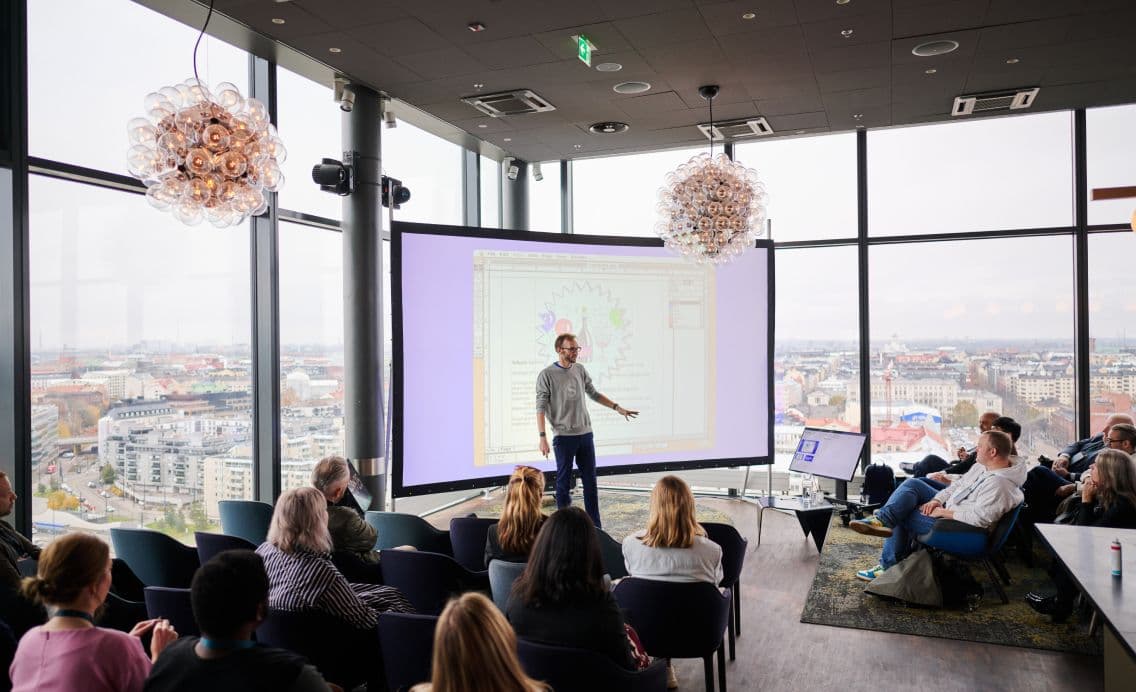
Components-first thinking can trap content — but it doesn't have to be that way. Structured content can be composable and reusable, delivering more personalised experiences. In his speaker session at Future Commerce Finland, Simeon Griggs, Solutions Engineer at Sanity, details how to embrace content-first flexibility and shift your thinking from components to content in the composable era.
“The monolith is problematic, and at Sanity, we saw that headless implementation, for the most part, was just repeating the mistake of the monolith. We believe in completely separating contact as data”, says Simeon Griggs, Solutions Engineer at Sanity.
We’ve been creating content and worrying about how it looks for years. People who author content have always wanted to control the presentation of their content. Since the beginning of Word Version 1, desktop publishing has always been concerned with what content looks like. As these platforms have evolved, we continued with this way of thinking. With the rise of WordPress, we were still concerned with authoring blog posts and determining how content looks simultaneously. With the rise of the block editor and drag-and-drop layout, everything was organised around how the content looked on a page at a specific time. Simeon says it’s time to break that cycle. We need to ask, “What is the content model of this page?”.
What’s a content model?
A web page isn’t just a page. Simeon says, “It’s a header, a hero, a content area and a sidebar with some links”. When you split those down into components, you stop looking at rectangles and blocks and start thinking about the information you’re showing. Look closer, and you’ll see the text is made up of interrelated content pieces, which are individual disparate entities—and they need to be modelled individually”.
“Content modelling is the process of defining the types of content you need, the attributes of each one, and the relationships between them. It’s about assembling those disparate pieces of content into a centralised structure”, says Carrie Hane, Principal Digital Strategist at Sanity.
But to see the benefit of a content model, we need to switch our thinking from a ‘design focus’ to a ‘content focus’.
Content focus or design focus?
The 'design focus' looks at colours, fonts, images and what something looks like right now. It talks about things like templates: course page template, lesson page template or course page template.
The problem with the design focus? It perpetuates a cycle of constant website revamps. When it gets outdated, we rebuild the website. Then, we rebuild the content management system (CMS). Sooner or later, we need to rebuild the website again. Simeon says we must escape this inefficient cycle by moving from ‘explicit curation’ to ‘content-driven curation’.
Instead of talking about ‘templates’, the content focus talks about content as data. Instead of a ‘lesson page template’, it talks about the ‘lesson’, the ‘course’ or the ‘presenter’. Simeon says when we talk about ‘lesson data’, we can think about it as separate entities outside the website. For example, you could export the lesson data into a PDF, app, audio or video. It could exist in many channels, which is the real promise of omnichannel. This content focus also allows us to experiment faster.
Explicit curation: “This is the hero because I made it so”
What does it mean to curate content explicitly? Imagine a sketch for a new website. You’ll typically have a hero section and three content cards. When you explicitly curate something, you might drag and drop the blocks and arrange them how you want. As the author, you’re effectively saying: “I’m designing the home page, and it doesn’t matter what other people’s preferences are or what they need at a specific time because my opinion matters more ”.
Content-driven curation: “This is the hero because it is most relevant”
In reality, different people have different needs and preferences. Other types of content may be more relevant for specific users, and hero content—and everything else—should change to suit them. Simeon illustrates this point with a few examples. “Imagine a store opening day in a specific location. Wouldn’t it be great to show that event in the hero section of the page if someone lives in that location? Alternatively, if you’re a returning customer, perhaps you’d like to navigate straight to new arrivals. Likewise, a member might expect pre-access to a sale”.
That’s the key to personalisation, and it requires a content-driven approach. Simeon says a website can take care of itself with the help of a few rules and logic. When we take a content-driven approach, a website becomes more adaptable to the person visiting it than the author who created that content at a specific time.
Wait! “But I want to add an image carousel and an auto-playing video”
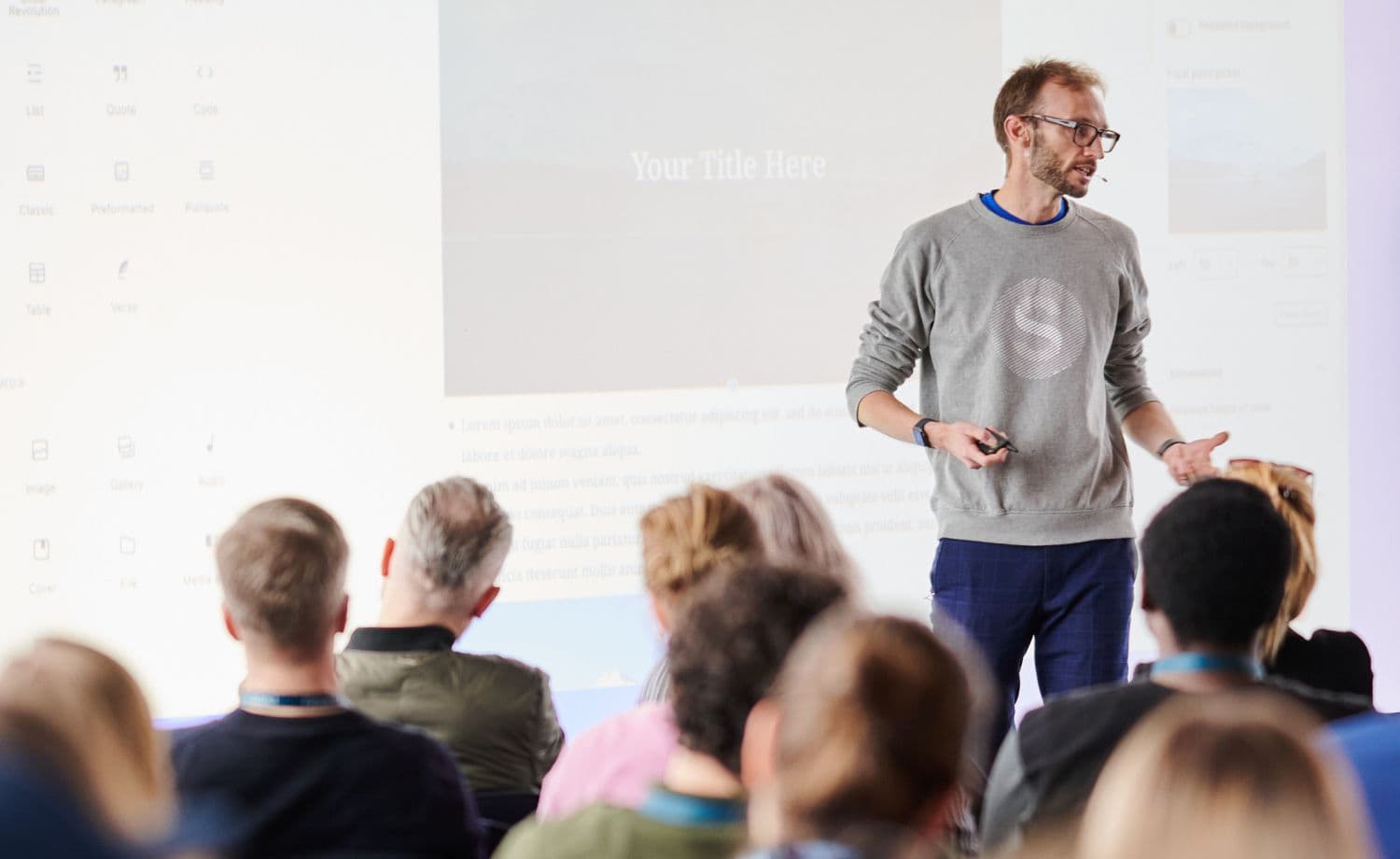
Not everyone is going to get content-driven curation at first. It can be pretty disorientating to understand what’s happening on the website when it has so many different views. Simeon believes we need to make progress in small steps. “Let's get away from the idea of being in control of every component at all times and let the content's relevance drive conversations and conversions”, says Simeon.
At some point, someone will say, “BUT I want to add an image carousel and an auto-playing video”. Simeon says that’s OK, too. Think about the journey as a sliding scale between explicit curation and content-driven curation. Just start moving in the right direction. Ask yourself, ‘How many more rules and logic can we apply to ensure we’re on the content-driven end of that scale?”.
The future of content is composable—and here’s how to get there
- Consider what it is, not what it looks like.
Before you start the design phase, spend some time thinking about the content model. What do you sell? What are the materials? Who makes them? What are the relationships between different pieces of content? Think about structured content. - Treat the website as one outlet for your content
This is the dream of omnichannel, but now it’s time to make it happen. A website is just a shell to put your business's content into. What other outlets could you have? - Content-driven designs are longer-lasting than curated.
When explicitly curating things, you’ll always have to build new components and shift things around- but that’s unmanageable. “There isn’t someone at Amazon constantly dragging things around on the homepage. It’s all algorithm-generated”, says Simeon. A content-driven approach just lasts longer. - Begin planning your content.
Start the conversation, and do it before the redesign process begins. Ask if you can accurately model all the content concerning your business. What’s missing? - Make non-developers understand the content, not the components.
Don’t get locked into the bits that make up the website—such as rectangles and boxes. Instead, think about the content that will populate them. What kinds of storytelling can you empower when you map out the relationships between individual pieces of content?
To learn more about prioritising content over components, read Simeon’s blog.